Holding the Centre: Names, Mythologies, and Finding Our Bearings
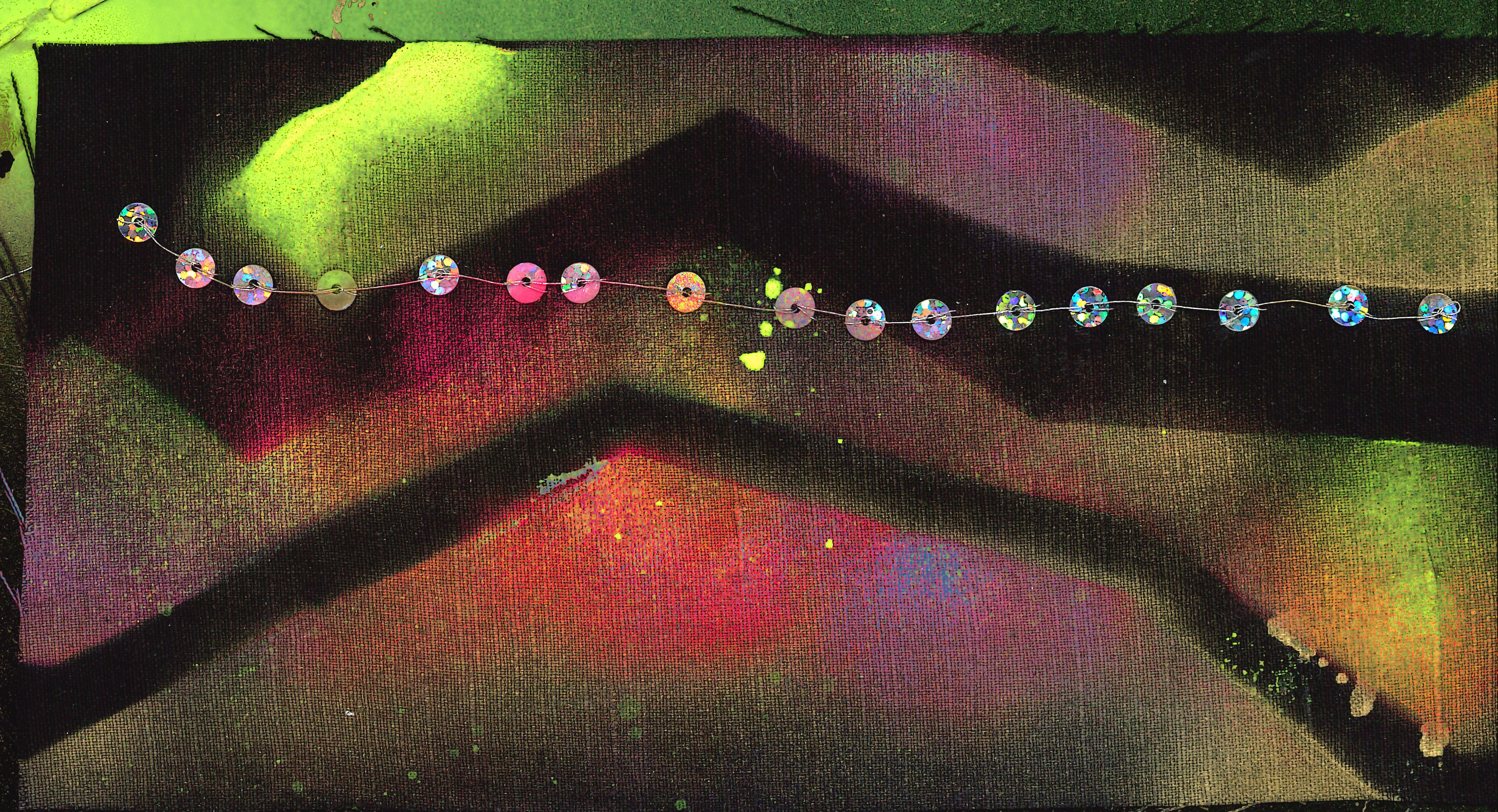
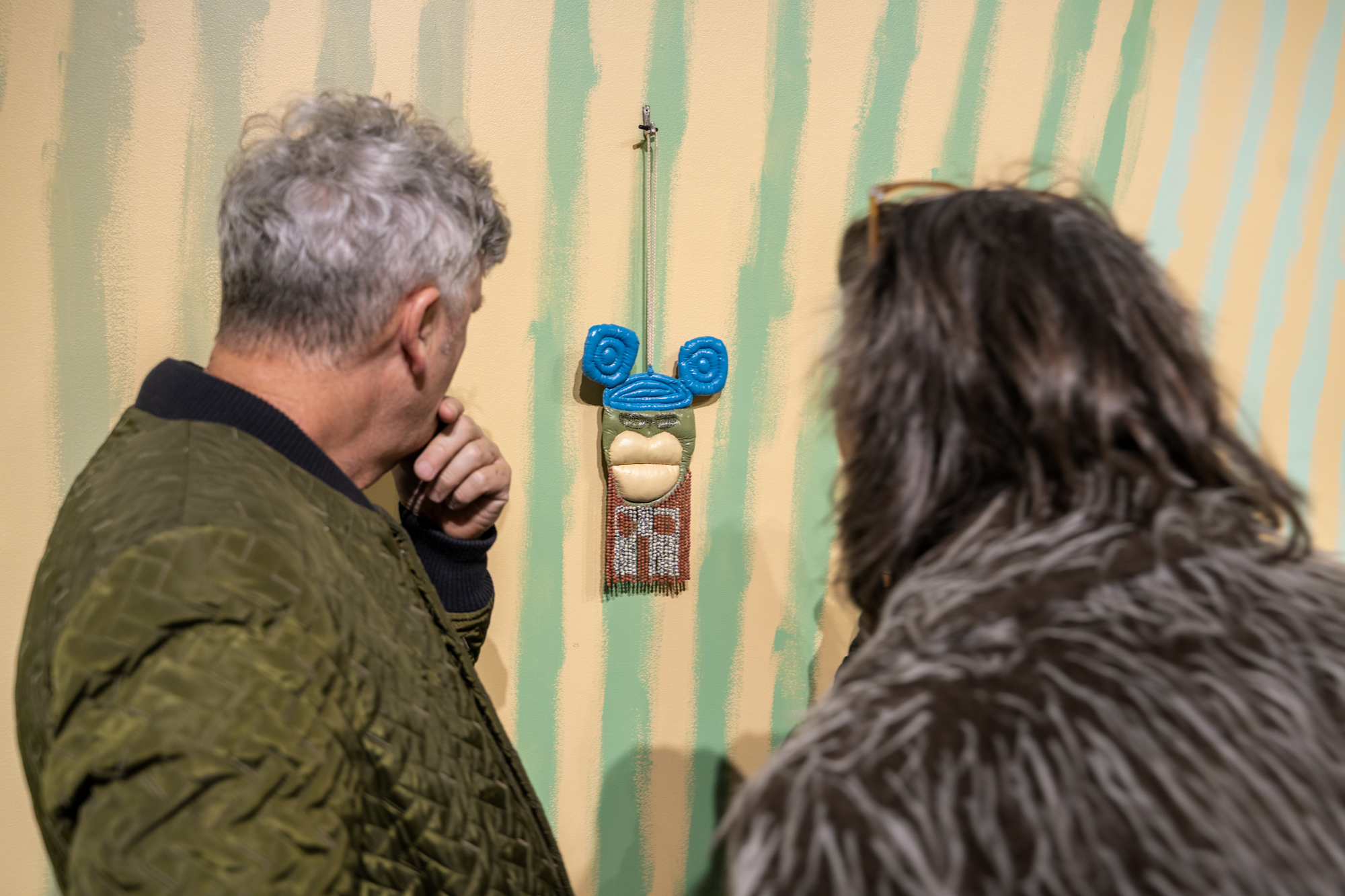
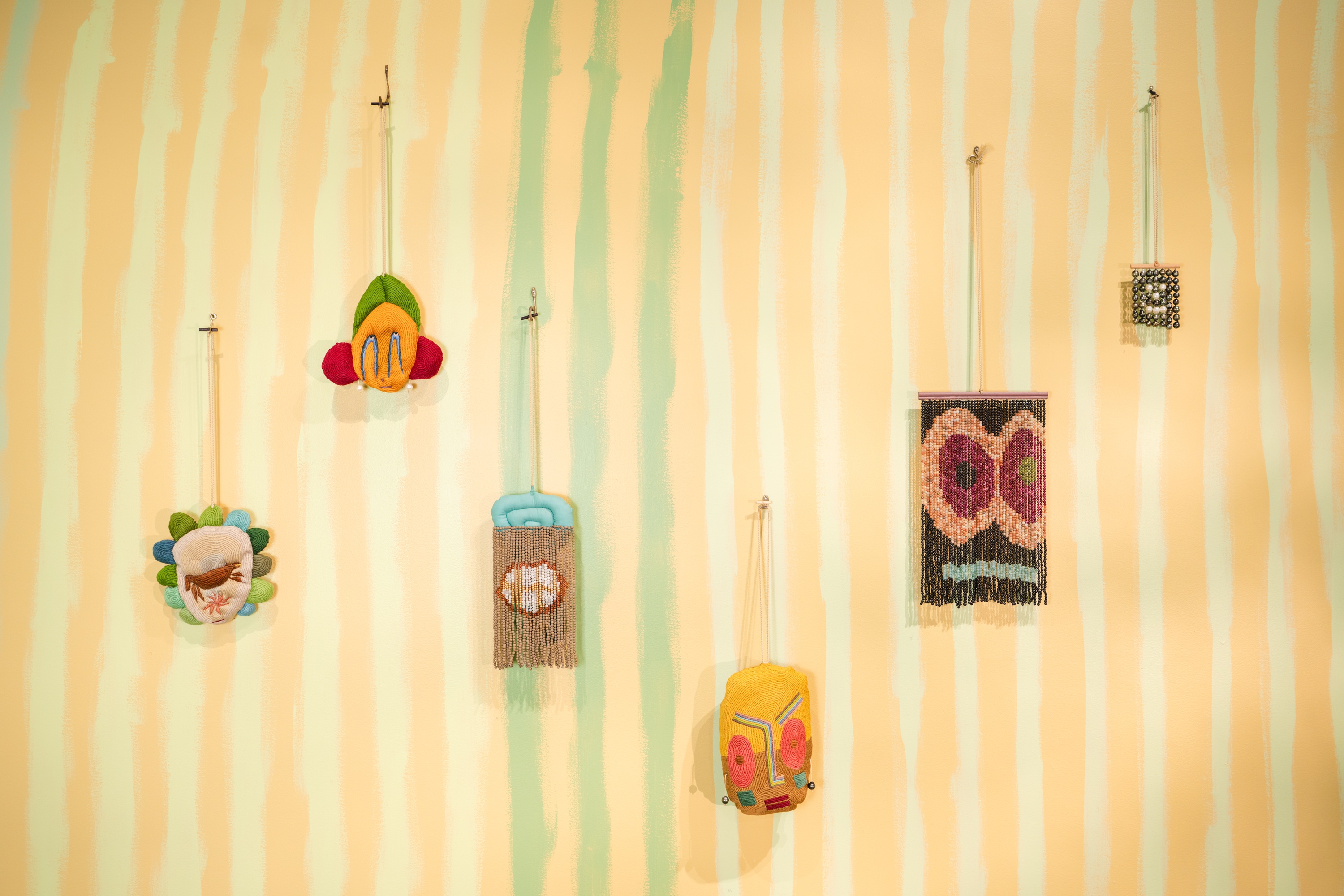
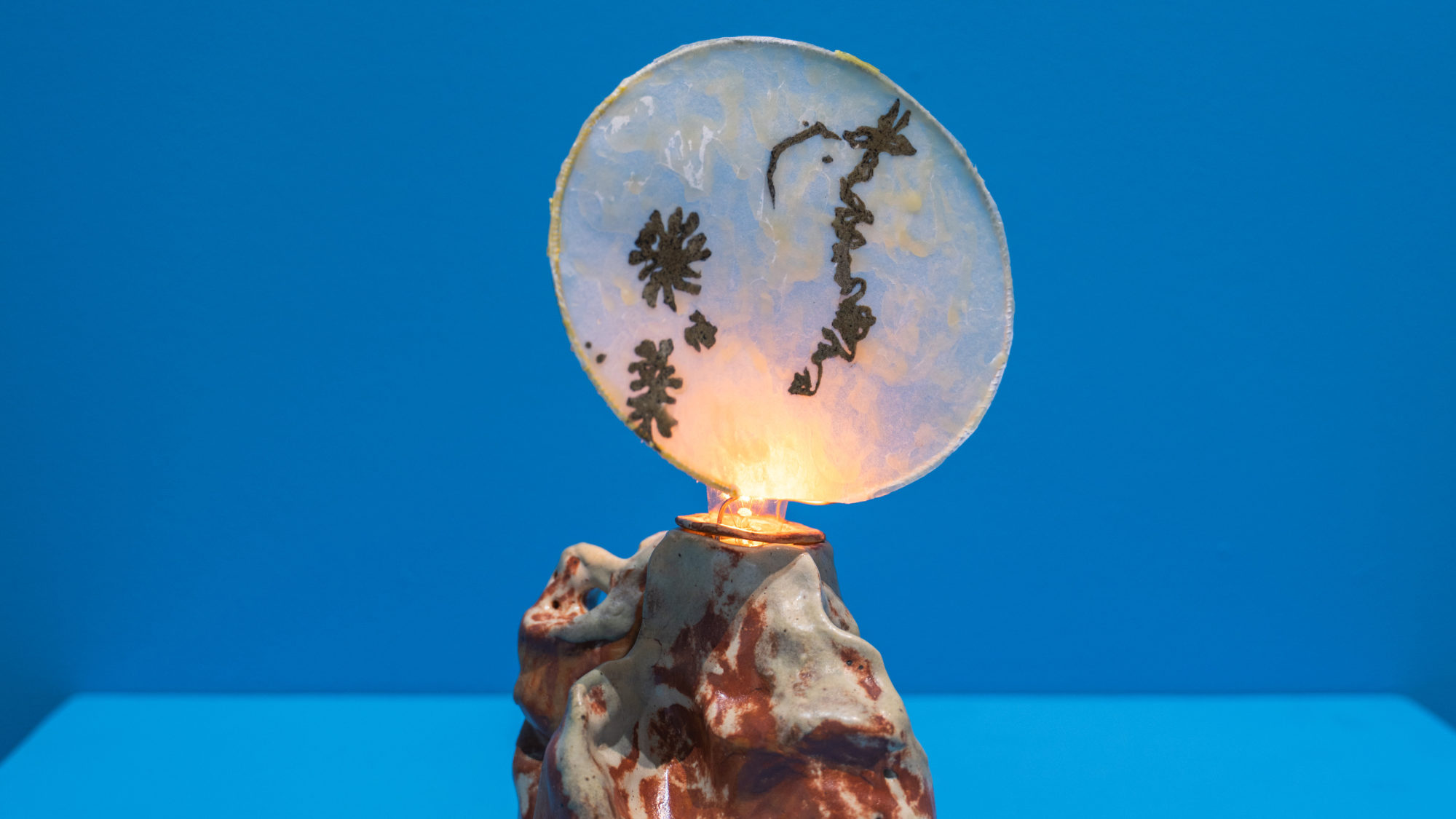
In this essay, Te Atamira Exhibitions Manager Hayley Walmsley wades into the space of reflection which is central to our current exhibition, Infinite Possibilities. This exhibition is free to visit in our Whakaari gallery space until 11 August 2026.
A lot of knowing starts before facts do.
Before I knew anything about constellations, astronomy, or people who owned telescopes and said things like “celestial body”, I noticed a cluster of stars that looked like a face. Not scary, just very present. Always watching, mildly intrusive, and the kind of face that would pretend not to be staring if you caught it.
I named him Tautoru Reretuarangi TeArikikorekore.
Loosely meaning: The Noble Tautoru Who Crosses the Sky of Potential.
A grand name for something I had entirely made up.
Chiefly. Ancient. A little dramatic.
Sometimes after disappearing for months, I’d look out the window and there he’d be, like Hey Girl. No apology or explanation, just hanging out up there in the sky. He’s always been the type of being who could sweep into a room late and expect everyone to pause.
Humans rarely stop at naming. We mythologise almost immediately. Give us something to name and we’ll build a narrative sturdy enough for that name to live inside. Once something keeps turning up in your life, you build a relationship with it. You start telling stories around it.
Sometimes his grand celestial title sticks. Occasionally he’s just Jimmy. That name came from my grandfather, Jim, whose name was actually Raymond — although I never heard anyone call him that. As a publican, Grandad knew something about odd hours too.
Eventually, I learned the stars I’d turned into a nosy sky man were actually Orion’s Belt.
I remember feeling mildly offended. He already had a name, habits, presence, history. And now I was expected to accept that this all-knowing sky face was, apparently, some bloke’s belt. As if a lifetime of relationship could reduce him to an accessory. It ended up feeling less like discovering something new and more like finding out I’d accidentally joined a conversation already in progress.
Which happens more than people admit.
Somehow what began as a cluster of stars has become a regular presence with patchy boundaries. There was a stage where that familiarity annoyed me. It felt like no matter where I went, there he was. Then I moved to Dunedin and couldn’t find him anywhere. Night after night, nothing. I thought maybe I’d finally escaped surveillance… but I missed the company.
Thankfully, absence is often only down to angles: what you can perceive from that specific vantage point. And because of that partial view, human nature pushes us to try and locate ourselves anyway. We use Google Maps, roads, mountains, family stories, routines, unresolved feelings, star signs, the flightpath of an Albatross…whatever Aunty sounds most certain.
Give us enough years somewhere and we’ll call it home. Give us one dubious coincidence and we’ll dine out on it for decades. Give us three dots and we’ll draw lines between them. We love the idea of a fixed centre.
But centres are multiple and slippery. Attention shifts, distance shifts, and meaning shifts with it.
People like to pretend life is rational, but plenty of what shapes us happens despite our want for comfort. Those things that make us human (emotions, circumstance and happenstance) slip in whether we plan for them or not. As do chance encounters, borrowed ideas, and the quiet pull of other people’s gravity.
Once you notice that, life looks less planned and more assembled. Like convergences that happen to hold, stubbornly catching long enough to influence what comes next. Entire futures built on tired decisions made on a Tuesday after you had to buy your lunch because you refused to get out of bed on time.
Yet, two people can stand on the same street and live in entirely different worlds.
This is why a face in the night sky still matters to me. It gives me a sense of being perceived.
Things come back around more often than they don’t.
We spend years looking for the centre as if it exists somewhere else. But every life is lived from one unrepeatable point of view. Each of us stands firmly, holding the centre of our own known universe. We mark the places we inhabit with memory, feeling, labour, story, and use. The places we carry mark us; through rhythm, scale, weather, distance, and the lives we lead.
We do not meet the world neutrally. We never stop influencing surrounding bodies. We keep arriving. I am in another house now, in another phase of life, looking out another window where Tautoru is staring back at me. I have started a new job. Three artists I did not know beforehand are now orbiting with me. Any number of minor turns could have sent each of us elsewhere. Instead, for now, our lines cross here. None of this was inevitable, only the latest convergence to hold.
From here, as ever, the possibilities are infinite.